How I Taught Over 500 Everyday Americans the “Buy, Borrow, Die” Strategy on M1



When I wrote my first blog for M1, I shared how discovering the Borrow button completely transformed the way my wife Stella and I think about money. What surprised me most was how simple the concept was. I did not grow up learning about money, yet this single discovery helped me rethink everything about wealth, taxes, and financial independence.
This post goes deeper into our personal experience using a long-term Buying and Borrowing framework and how it continues to shape the way we invest, manage risk, and build wealth today. My goal is not to tell anyone what to do. My goal is simply to share what worked for us, what we learned along the way, and how M1 has been an important part of that journey.
Where My Journey Really Started
I grew up in a family that lived paycheck to paycheck. There was no YouTube or Google. There were no online courses teaching everyday people how the wealthy think about money. I had to learn it the hard way. I spent years studying, reading every book I could get my hands on, and eventually wrote four books, and became a fiduciary financial advisor for over a decade.
By 2018, I realized that the traditional advice I had been trained to give was unlikely to create an early or tax-efficient retirement for us. So, I resigned as a financial advisor and began my journey down the rabbit hole.
Then COVID happened. My speaking events were canceled. The world changed. And that is when I launched The Perfect Portfolio, a financial education company dedicated to helping ordinary Americans understand how money and taxes work.
Around that same time, I opened an M1 account. That decision changed everything.
That is when I found something I had never seen before: The Borrow button.
It felt like I had discovered a missing chapter from the wealth playbook. Soon, I discovered the “Buy, Borrow, Die” strategy and began teaching it to anyone, regardless of their income.
The Buy Borrow Die Framework and How We Use It
This is not financial advice. This is simply our personal system for long-term investing, risk management, and liquidity. It helped us, and it has helped more than 500 families we taught.
Below is how my wife and I personally use M1 while keeping risk management at the center of everything we do.
Step One: Buy
- We opened a taxable brokerage account on M1.
- We built our Pie with ETFs and blue-chip dividend-paying stocks.
- We keep buying consistently, year after year.
For us, the magic is in consistency. This is where M1 made that extremely easy.
We set up direct deposit so money flows automatically into our M1 Invest account. Then we added recurring weekly contributions that keep our portfolio growing regardless of what the market is doing. Whether the market is going up or down, we continue to buy.
Every week, a portion of our income buys assets that may grow over time. That is how we have built wealth. Not through timing, not through guessing, but through investing more every week and letting time and the power of compounding to do the heavy lifting for us.
How M1 Helps Us Buy More of What’s Down
One of the features that made a real difference for us is M1’s dynamic rebalancing system. When we make deposits, M1 automatically directs new money toward the slices of our Pie that are below our target percentages.
For us, that means:
- If a stock or ETF drops, M1 automatically buys more of it.
- If something runs up, M1 slows down purchases until it falls back in line with the target risk in our portfolio.
This keeps our portfolio aligned with our plan, and it removes emotion from the process. Instead of trying to review what’s up or what’s down, M1 quietly helps us buy assets when they’re temporarily on sale.
For long-term investors like us, that was a game changer.
Step Two: Borrow
My CPA once told me something that stuck with me. He said, “If you do not sell, you do not realize capital gains taxes.” That one sentence changed the way I viewed access to my money without taxes taking a slice.
This is where the M1 framework became truly life changing for us.
Instead of selling assets when we needed money, we began exploring the Borrow button.
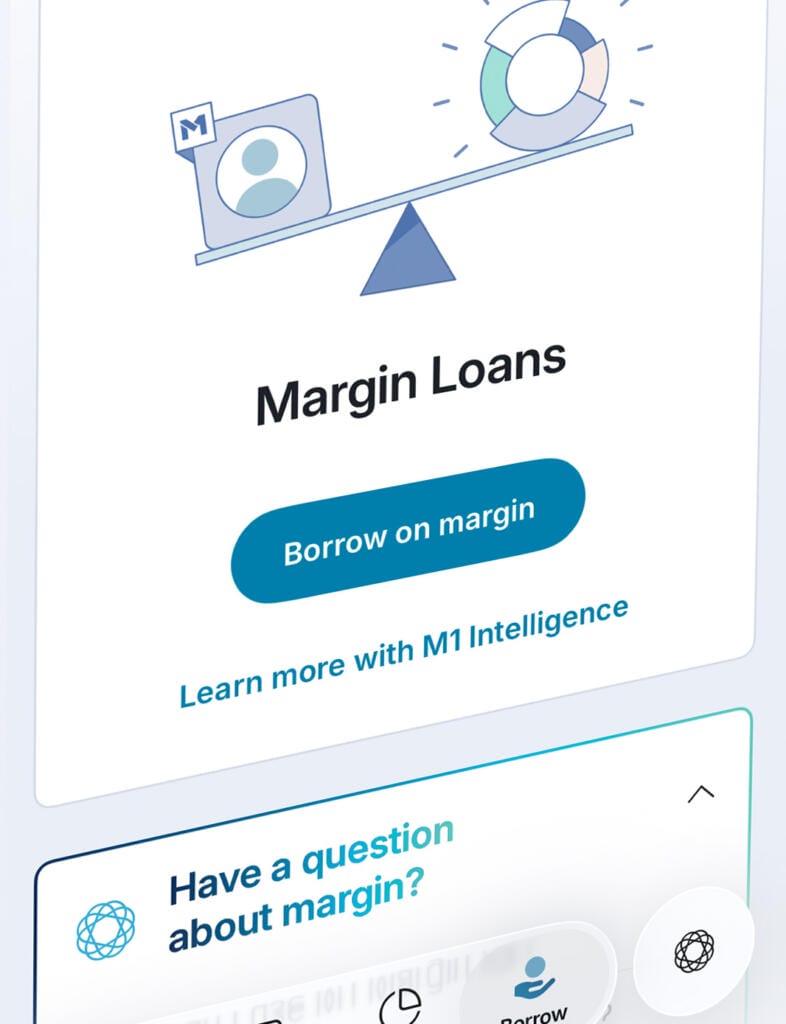
Yes, margin loans accrue interest, but our CPA let us know that margin interest can be deductible as long as we use it for investing. Tax treatment varies for everyone, and M1 encourages users to speak with a licensed tax professional.
For Stella and I, the Borrow button created new possibilities.
A Real Example from Our Life
A few years ago, I had only $10,000 invested on M1 and I needed $1,500 unexpectedly. Instead of selling my holdings and possibly creating a tax bill, I pressed Borrow. I sent the money to my checking account to cover the expense.
Using Borrow allowed my investments to keep compounding.
And because I did not sell, no gains were realized.
This was the first time I experienced true liquidity without interrupting my long-term growth.
When We Borrow
Borrowing is not for everyone and must be approached with discipline. Here are the personal rules my wife and I use. These are not recommendations. They are how we choose to manage risk.
- We may borrow when the market dips 10–15%.
- We borrow only with a clear purpose, such as business investment or rental property repairs.
- We borrow when certain yields exceed our borrow rate by about 3–4%.
- We borrow only after reviewing our Margin Health Dial.
Don’t forget: Borrowing always involves risk. Investments can rise and fall, and Margin increases both potential gains and potential losses.
How Much We Borrow
We started very small. In the beginning, we used no more than 10–20% of our margin. Although M1 allows borrowing up to 50% of eligible securities, that does not mean everyone should.
After teaching hundreds of students, and using the strategy for years, we personally keep our borrowing around 30%, or less. This gives us leverage without creating stress.
I use a simple test:
If the market dropped 30%, would I remain comfortable?
If the answer is yes, then I feel we are managing risk wisely.
Common Myths About Margin
Myth One: Margin calls happen out of nowhere.
A margin call happens only when borrowing exceeds safe limits. Fortunately, M1 alerts you well in advance and gives you time to adjust, deposit funds, or reduce borrowing.
Myth Two: Margin is like gambling.
Day traders gamble. Long term margin use is completely different. The Buy Borrow Die framework is not a trading strategy. It is a long-term liquidity system.
Myth Three: Interest rates make borrowing impossible.
This may be true with other brokers which charge 11- 12%, or more. But with M1 Borrow rates being some of the lowest in the industry, that risk is reduced.
For us, if our long-term yield exceeds our borrow rate by several percentage points, the spread may be worthwhile. That does not guarantee results.
Markets can go down. Borrowing increases risk, but for us, the cost of borrowing is minimal when compared to the taxes from selling shares.
The Responsible Investor Framework
We:
- Never borrow more than 30% of our portfolio
- Diversify across ETFs and blue-chip positions
- Keep six to twelve months of cash for emergencies
- Borrow only when yields exceed our borrowing cost
- Monitor our Margin Health Dial weekly
Risk cannot be eliminated. It can only be managed.
When Borrowing Became a Wealth Tool for Us
In 2023, we used an M1 margin loan to fund the down payment on a rental property. That property now produces $1,700 a month in cash flow, which we reinvest directly into M1. That single loan created an income stream that compounds and helps finance future opportunities.
This was the moment when everything clicked. We used to work for money. Now our money works for us and keeps earning even while we sleep.
Final Thoughts
Warren Buffet famously said, “If you don’t find a way to make money while you sleep, you will work until you die.” That quote hit me hard. It pushed me to raise my financial IQ and learn how to make money work for me instead of working hard for money while battling taxation and inflation.
Buy Borrow Die is not a loophole. It is a long-standing proven strategy that wealth focused families have used for generations to stay invested, create liquidity, and let compounding do the heavy lifting.
If you are ready to see how M1 can support your long-term path to financial independence, open an M1 account, build your Pie, and explore the Borrow button—responsibly.
For us, and for hundreds of everyday Americans, it changed everything.
Mark Quann
Author of Be Smart Pay Zero Taxes
Founder of The Perfect Portfolio
SAIF-11172025-jqeynsjp
- Categories
- M1