
What is a SIMPLE IRA?



A SIMPLE IRA (Savings Incentive Match Plan for Employees) is a tax-deferred retirement account that lets employees and employers of a small business — one with 100 or fewer employees — contribute to traditional IRAs set up for each employee. Employees contribute through salary deferrals, and the employer is required to chip in too.
Below, you’ll learn what a SIMPLE IRA is, how much you can contribute in 2026, how employer contributions and withdrawals work, and how a SIMPLE IRA stacks up against other retirement accounts — whether you’re an employee weighing a plan your employer offers or a small-business owner deciding whether to set one up.
How much can you contribute to a SIMPLE IRA in 2026?
For the 2026 tax year, an employee can contribute up to $17,000 in salary deferrals to a SIMPLE IRA. If you’re age 50 or older, you can make an additional $4,000 catch-up contribution. Under the SECURE 2.0 Act, employees who are ages 60 to 63 can make a higher catch-up of $5,250 in 2026.
| Contribution (2026 tax year) | Limit |
| Employee salary deferral | $17,000 |
| Catch-up, age 50+ | +$4,000 |
| Enhanced catch-up, ages 60–63 (SECURE 2.0) | +$5,250 |
Source: IRS, SIMPLE IRA contribution limits (2026 tax year). Limits are adjusted annually — confirm current figures at IRS.gov.
One exception worth checking: some SIMPLE plans have a higher limit. If your employer has 25 or fewer employees — or has 26 to 100 and chooses to contribute more — the 2026 deferral limit is $18,100 instead of $17,000. Most SIMPLE plans are small enough to qualify, so ask your employer which applies to yours. Catch-up amounts differ for these plans too. The full 2026 figures are in IRS Notice 2025-67.
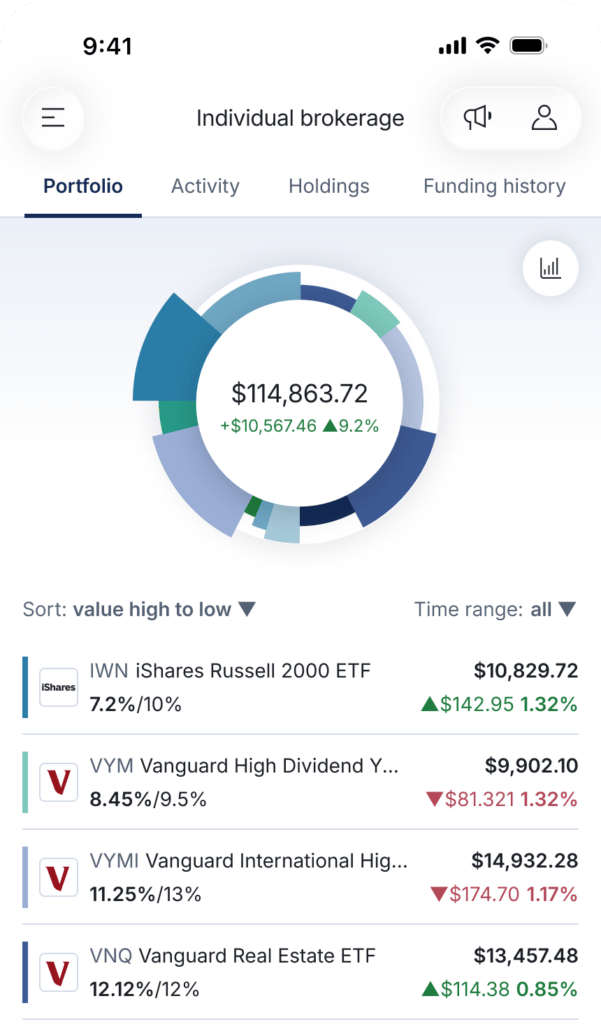
Put your retirement investing on auto-pilot. You can open Traditional, Roth, and SEP IRAs on M1. Choose the one that fits your strategy.
How do employer contributions to a SIMPLE IRA work?
If an employer offers a SIMPLE IRA, employees may choose whether to take part. Employers, however, are required to contribute to each participating employee’s account, and they must use one of two methods:
- 3% matching contribution: the employer matches your salary deferrals dollar-for-dollar, up to 3% of your compensation, not limited by annual compensation limit. If you don’t contribute anything, the employer generally doesn’t have to make a matching contribution for you. (An employer may reduce the match to as low as 1% in no more than two of any five years.)
- 2% nonelective contribution: the employer contributes 2% of your compensation, up to an annual limit of $360,000, whether or not you defer any of your own pay.
The 2% and 3% formulas set the required employer contribution, with no separate dollar cap. SECURE 2.0 also lets an employer add an optional contribution on top, and that one is capped at the lesser of $5,300 or 10% of an employee’s compensation per employee for 2026. Either way, employer contributions are fully vested immediately — unlike some 401(k) plans with multi-year vesting, the money your employer deposits is yours right away.
Source: IRS, SIMPLE IRA plan.
Who is eligible for a SIMPLE IRA?
If an employer offers a SIMPLE IRA, it generally must offer it to every employee who earned at least $5,000 in any two preceding years and is expected to earn at least $5,000 in the current year. SIMPLE IRAs are limited to businesses with 100 or fewer employees, which is why they’re common at small companies rather than large ones.
What are the withdrawal and distribution rules for a SIMPLE IRA?
Once you reach age 59½, you can take distributions from your SIMPLE IRA without an early-withdrawal penalty. Distributions are taxed as ordinary income. And like a traditional IRA, a SIMPLE IRA is subject to required minimum distributions (RMDs) — under current rules you generally must begin RMDs at age 73, rising to age 75 for those born in 1960 or later under the SECURE 2.0 Act.
SIMPLE IRA early withdrawal penalty
SIMPLE IRAs carry a steeper early-withdrawal penalty than most retirement accounts in the first two years. Withdraw funds within the first two years of your first contribution and a 25% penalty may apply; after that, but before age 59½, it drops to 10% — the same as a traditional IRA. Because these penalties sit on top of any ordinary income tax due, early withdrawals can get expensive.
SIMPLE IRA rollover rules
A rollover from one SIMPLE IRA to another SIMPLE IRA is generally tax-free at any time. But a rollover from a SIMPLE IRA into a different type of retirement account — such as a traditional IRA — may be taxable if it happens during your first two years in the plan. After that two-year window, you can generally roll a SIMPLE IRA into a traditional IRA tax-free, which is one way people consolidate an old employer’s plan after leaving a job.
How is a SIMPLE IRA taxed?
A SIMPLE IRA is tax-deferred, similar to a traditional IRA. Employee contributions are generally not subject to federal income tax in the year they’re made, so they may reduce your taxable income for that year. Your investments then grow tax-deferred, and withdrawals in retirement are taxed as ordinary income. SECURE 2.0 also permits Roth SIMPLE contributions, made with after-tax dollars, where an employer’s plan offers them — so check whether yours does.
One detail to note: while contributions are exempt from federal income tax, they’re still subject to the taxes that fund Social Security, Medicare, and federal unemployment insurance. In practice, that means your deferral lowers your income-tax bill for the year but not your payroll taxes. On the employer side, businesses can generally deduct their SIMPLE IRA contributions as a business expense; how they claim it depends on whether the business is a sole proprietorship, corporation, or another entity.
SIMPLE IRA vs. other retirement accounts
Employees usually can’t choose the retirement plan their employer offers. But many people complement an employer plan with a personal account. Here’s how a SIMPLE IRA compares to a traditional IRA, a Roth IRA, and a SEP IRA across the dimensions that tend to matter most:
| Feature | SIMPLE IRA | Traditional IRA | Roth IRA | SEP IRA |
| Who can open it | Small businesses (≤100 employees) + their employees | Any individual with earned income | Any individual with earned income (subject to income limits) | Business owners / self-employed |
| Who contributes | Employee + employer (employer required) | Individual | Individual | Employer only |
| 2026 contribution limit | $17,000 employee deferral (+$4,000 age 50+; +$5,250 ages 60–63) | $7,500 (+$1,100 age 50+) | $7,500 (+$1,100 age 50+) | 25% of compensation, up to $72,000 |
| Tax treatment | Contributions pre-tax; withdrawals taxed | Contributions often pre-tax; withdrawals taxed | Contributions after-tax; qualified withdrawals tax-free | Contributions pre-tax; withdrawals taxed |
| Income limits to contribute | Must have at lease $5,000 in compensation from employer during any two prior years | No (deduction may phase out) | Yes (MAGI phase-out) | No |
| Early-withdrawal penalty | 25% first 2 years, then 10% before 59½ | 10% before 59½ | Contributions withdrawable anytime; earnings may be penalized | 10% before 59½ |
Sources: IRS SIMPLE IRA, IRA contribution limits, and SEP contribution limits (2026 tax year). Roth IRA eligibility phases out based on modified adjusted gross income; confirm current thresholds at IRS.gov.
What sets a SIMPLE IRA apart is the required employer contribution. Which account fits depends on your employment situation, income, and goals — and many people use more than one.
Can you open a SIMPLE IRA with M1?
M1 doesn’t offer SIMPLE IRAs, since a SIMPLE IRA is established through your employer. On M1 you can open a Traditional IRA, Roth IRA, or SEP IRA to invest for retirement alongside a workplace SIMPLE IRA.
On M1 you can build a custom portfolio, set recurring contributions, and have new deposits directed toward the target weights you’ve set. Account fees may apply; see the M1 Fee Schedule.
The M1 bottom line
A SIMPLE IRA is a straightforward way for a small business to offer retirement savings. If your employer offers one, whether and how much to contribute depends on your own situation — and your options don’t end there. A personal IRA can sit alongside a workplace plan.
Frequently asked questions about SIMPLE IRAs
A SIMPLE IRA is a retirement plan for small businesses (generally 100 or fewer employees) that lets employees contribute through salary deferrals and requires the employer to contribute as well. Contributions are tax-deferred, and withdrawals in retirement are taxed as ordinary income.
For 2026, employees can defer up to $17,000, plus a $4,000 catch-up at age 50+ or a $5,250 enhanced catch-up at ages 60–63 under SECURE 2.0. Employers separately contribute via a 3% match or a 2% nonelective contribution. Figures are set by the IRS and change annually; confirm at IRS.gov.
Employers must either match employee deferrals dollar-for-dollar up to 3% of compensation, or make a 2% nonelective contribution for all eligible employees regardless of whether they defer. Employer contributions are fully vested immediately.
Both are IRA-based plans tied to a business, but a SIMPLE IRA allows employee and employer contributions and is for businesses with 100 or fewer employees, while a SEP IRA is funded by employer contributions only (up to 25% of compensation or $72,000 in 2026) and can be used by a business of any size.
Withdrawals taken within the first two years of your first contribution may face a 25% penalty; after two years but before age 59½, the penalty is generally 10%. Penalties are in addition to ordinary income tax on the withdrawal.
Generally yes — participating in an employer’s SIMPLE IRA doesn’t prevent you from also contributing to a personal Traditional or Roth IRA, though your Roth eligibility and traditional-IRA deduction can depend on your income.
Investing involves risk, including the possible loss of principal. This content is educational and is not personalized investment, tax, or legal advice. M1 does not provide tax advice; consult a qualified professional about your situation. Tax figures and rules referenced are set by the IRS and change periodically — verify current figures at IRS.gov. Brokerage products and IRAs are offered by M1 Finance LLC, member FINRA/SIPC.
SAIF-07272026-bhlx28wj


