
What is a SEP IRA?



A SEP IRA (Simplified Employee Pension) is a retirement plan that lets an employer — including a self-employed person — make tax-deductible contributions to traditional IRAs set up for themselves and any eligible employees. For the 2026 tax year, contributions can reach up to 25% of compensation, capped at $72,000.
SEP IRAs are available to the self-employed and small-business owners. If you are a W-2 employee with no self-employment income, you cannot open a SEP on your own — a traditional or Roth IRA or your workplace 401(k) may apply instead. If you have side or freelance income, you may be able to use a SEP for that business even while participating in an employer’s 401(k).
Because the contribution ceiling is higher than a standard IRA and the plan is generally inexpensive to run, a SEP IRA is one option some self-employed individuals and small-business owners consider when they want to save more for retirement than a traditional or Roth IRA alone allows. Like any tax-deferred account, it also carries tradeoffs — withdrawals are taxed as income and required minimum distributions eventually apply. This article explains how a SEP IRA works, who qualifies, the current-year contribution limits, and how it compares with a SIMPLE IRA and a Solo 401(k).
How does a SEP IRA work?
A SEP IRA is funded entirely by the employer. There are no employee salary-deferral contributions, per the IRS SEP plan rules — the feature that most distinguishes it from a 401(k) or a SIMPLE IRA.
The employer sets up a traditional IRA for each eligible person, then decides each year whether to contribute and how much (within the IRS limit). Contributions are generally tax-deductible for the business, and the money grows tax-deferred until it is withdrawn, at which point distributions are taxed as ordinary income. If you are self-employed with no employees, you are effectively both the employer and the participant — you contribute for yourself.
One condition applies for business owners with staff: contributions must generally be made at the same percentage of compensation for every eligible employee. That uniform-percentage requirement can make a SEP costly if a business has many employees, which is a key limitation to weigh before choosing one.
Who is eligible for a SEP IRA?
A business of any size — including a sole proprietor with no employees — can establish a SEP. Under the IRS eligibility rules, an employer can require an employee to meet all of the following before they must be included:
- Be at least age 21
- Have worked for the business in at least 3 of the last 5 years
- Have earned at least the IRS minimum compensation for the year — $800 for 2026 (up from $750 for 2025), under section 408(k)(2)(C)
Employers may choose less restrictive requirements, but not more restrictive ones. Anyone who meets the plan’s conditions must be offered participation, which is why the plan tends to suit the self-employed and very small teams most cleanly.
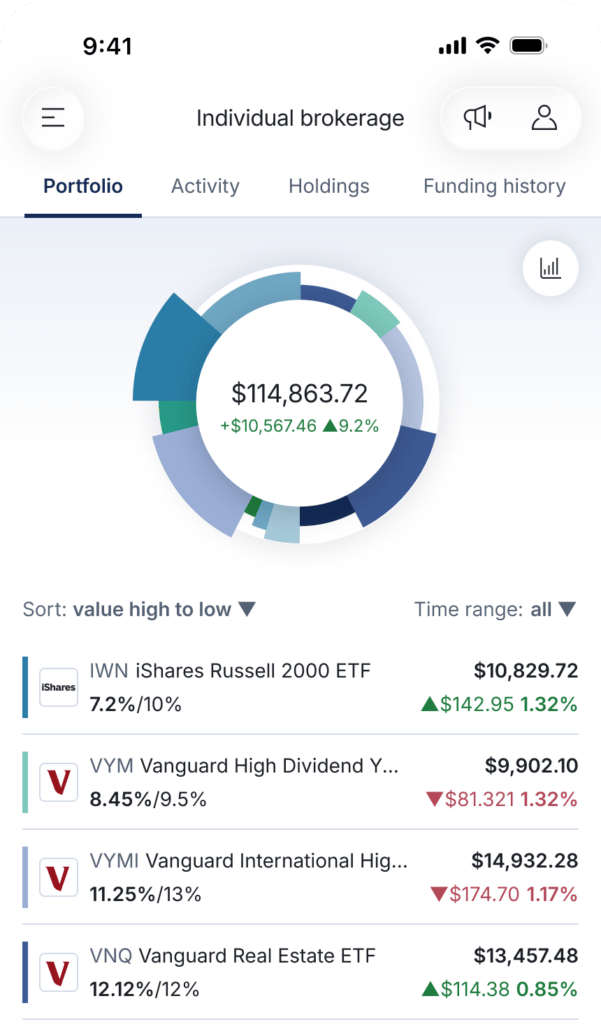
Put your retirement investing on auto-pilot. You can open Traditional, Roth, and SEP IRAs on M1. Choose the one that fits your strategy.
How much can you contribute to a SEP IRA in 2026?
For the 2026 tax year, an employer can contribute up to the lesser of 25% of an employee’s compensation or $72,000, based on the IRS cost-of-living limits. Only the first $360,000 of compensation can be counted when calculating the contribution.
SEP IRAs do not offer catch-up contributions, because those apply only to employee salary deferrals, which a SEP does not have.
Self-employed vs. employee contribution limits
The 25% figure applies cleanly to a common-law employee’s W-2 compensation. If you are self-employed, the math is different: your contribution is based on net earnings from self-employment, and because your own contribution and the deductible portion of self-employment tax reduce that figure, the effective rate generally works out to roughly 20% of net earnings rather than a full 25%.
As an illustration only, a self-employed saver with $100,000 in net self-employment earnings would generally be able to contribute in the neighborhood of $18,000–$20,000, not the full $25,000 a flat 25% might suggest. The IRS provides a rate table and worksheet in Publication 560 for the exact calculation, and many self-employed savers confirm the number with a tax professional.
You can also contribute to your own traditional or Roth IRA in the same year you receive SEP contributions, subject to the separate annual IRA contribution limits ($7,500, or $8,600 if age 50 or older, for 2026), per the IRS COLA limits. Whether an IRA contribution is deductible may depend on your income.
How do withdrawals and RMDs from a SEP IRA work?
You can take distributions from a SEP IRA at any time, but all withdrawals are taxed as ordinary income. If you withdraw before age 59½, you may also owe a 10% additional tax (commonly called the early-withdrawal penalty) in addition to income tax, unless an exception applies.
Early withdrawal penalty exceptions
The IRS waives the 10% additional tax (though income tax may still apply) for certain distributions, including:
- A first-time home purchase (up to a $10,000 lifetime maximum)
- Qualified higher-education expenses
- Expenses related to a birth or adoption (up to $5,000)
- Total and permanent disability
- Unreimbursed medical expenses that exceed 7.5% of your adjusted gross income
- Health insurance premiums paid while unemployed
The full list and conditions are on the IRS early-distributions page (Topic No. 557). Early withdrawals can meaningfully reduce the retirement savings you have left to compound, so they are generally treated as a last resort.
Required minimum distributions (RMDs)
Because a SEP IRA is tax-deferred, the IRS eventually requires you to start withdrawing. Under the SECURE 2.0 rules reflected in the IRS required minimum distribution FAQs, required minimum distributions generally begin at age 73 (rising to age 75 for those born in 1960 or later).
If you miss an RMD, a 25% excise tax applies to the amount you should have withdrawn — reduced to 10% if you correct the shortfall within the IRS correction window. A SEP IRA funded with traditional pre-tax contributions does not offer tax-free withdrawals and is subject to these RMDs; a Roth IRA is treated differently. SECURE 2.0 also permits Roth SEP contributions where a provider offers them.
SEP IRA advantages and disadvantages
Like any retirement account, a SEP IRA involves tradeoffs. Weigh both sides against your own situation.
Potential SEP IRA advantages
- High contribution ceiling: the $72,000 (2026) limit is well above the standard IRA limit, which can help higher-earning self-employed savers set aside more.
- Tax-deductible contributions: contributions are generally deductible for the business, and investments grow tax-deferred.
- Low cost and flexibility: SEPs are inexpensive to set up and carry no requirement to contribute every year, which can help in uneven-income years.
Potential SEP IRA disadvantages
- Withdrawals are taxed and RMDs apply: distributions are taxed as ordinary income, and RMDs begin at 73–75. Savers who expect higher future tax rates sometimes also consider a Roth account for tax diversification.
- No employee deferrals or catch-up: unlike a 401(k) or SIMPLE IRA, employees cannot contribute their own salary, and there are no age-50 catch-up contributions.
- Uniform-percentage rule: if you have employees, you must generally fund the same percentage for everyone, which can become expensive as a team grows.
SEP IRA vs. SIMPLE IRA vs. Solo 401(k)
Self-employed savers frequently compare these three plans. Each is a legitimate choice with different tradeoffs across contribution limits, who funds the account, administrative effort, and Roth availability. All figures below are 2026 IRS limits.
| Feature | SEP IRA | SIMPLE IRA | Solo 401(k) |
| Best suited for | Self-employed or small businesses wanting simplicity; with employees, contributions must be the same percentage of pay for everyone, which can raise cost as the team grows | Small businesses (100 or fewer employees) wanting an employee-deferral option | Self-employed with no employees (other than a spouse) wanting the highest effective contributions at lower incomes |
| 2026 contribution limit | Up to 25% of comp, max $72,000 | Employee deferral $17,000 + employer match | Employee deferral $24,500 + employer profit-sharing, up to $72,000 total |
| Who contributes | Employer only | Employee and employer | You act as both employee and employer |
| Catch-up (age 50+) | None | $4,000 ($5,250 if age 60–63) | $8,000 ($11,250 if age 60–63) |
| Roth option | Traditionally pre-tax; SECURE 2.0 permits Roth SEP contributions where a provider offers them | Roth SIMPLE now permitted under SECURE 2.0 | Roth 401(k) contributions available |
| Setup / admin effort | Lowest | Low | Higher (may require a plan document and, at higher balances, annual filing) |
| Required annual contribution | No | Yes — employer match or contribution required each year | No |
| RMDs | Begin at 73–75 | Begin at 73–75 | Begin at 73–75 (Roth 401(k) balances no longer subject to lifetime RMDs) |
All three are investment accounts, so balances fluctuate with the market and can lose value; withdrawals before age 59½ may trigger a 10% additional tax; and securities held in these accounts are covered by SIPC, which protects against broker-dealer failure, not market losses.
The right choice depends on your income, whether you have employees, and how you weigh each plan’s tradeoffs: the SEP’s low administrative effort and flexible, employer-only contributions; the SIMPLE’s employee-deferral option for small teams; and the Solo 401(k)’s higher effective contributions at lower incomes and Roth availability, balanced against its added setup and potential annual filing. Costs, contribution rules, liquidity, and tax treatment differ across all three, so many savers confirm the fit with a tax advisor before opening one.
Traditional IRA vs SEP IRA
A SEP IRA is a type of traditional IRA — it holds contributions made by an employer under a SEP plan. The core difference is the contribution limit: a SEP allows far more than the standard traditional IRA limit, but only the employer funds it.
Roth IRA vs SEP IRA
A SEP IRA has a much higher contribution limit than a Roth IRA, but the tax treatment is the opposite. A Roth IRA is funded with after-tax dollars and can provide tax-free qualified withdrawals in retirement, whereas a SEP IRA provides an up-front deduction with tax-deferred growth and taxable withdrawals. Some savers hold both to balance current and future tax exposure.
You can learn more in Traditional vs. Roth IRA.
How to open a SEP IRA
Opening a SEP IRA generally follows a few steps:
- Confirm eligibility and choose a provider.
Most brokerages that offer IRAs also offer SEP IRAs.
- Adopt a written SEP agreement.
Many providers use the IRS model Form 5305-SEP, or their own equivalent.
- Set up a SEP IRA for each eligible participant.
If your plan covers employees, you must also open an account for each eligible person and give them information about the plan. Not every provider administers employer SEP plans — confirm this before you choose one.
- Make contributions up to the IRS limit.
SEP contributions for a tax year can generally be made up to the business’s tax-filing deadline, including extensions.
The M1 bottom line
A SEP IRA can be a valuable retirement-savings option for self-employed individuals and small businesses that want a higher contribution ceiling and tax-deductible contributions. The tradeoffs — taxable withdrawals, RMDs, and the uniform-percentage rule for employers with staff — mean it is not the right fit for everyone, and comparing it against a SIMPLE IRA, Solo 401(k), and Roth IRA is worthwhile before deciding.
On M1, you can open a Traditional, Roth, or SEP IRA, choose your own target allocation, and set recurring contributions that follow it. M1 supports SEP IRAs for self-employed individuals only; if your business has eligible employees, you would need a provider that administers employer SEP plans.
M1 charges a platform fee and other fees may apply; see the M1 Fee Schedule for details.
Frequently asked questions about SEP IRAs
An employer of any size — including a self-employed person with no employees — can open a SEP. The employer can require an eligible employee to be at least 21, to have worked in 3 of the last 5 years, and to have earned at least the IRS minimum compensation for the year, per IRS rules. Eligibility rules can be less restrictive but not more.
For 2026, the limit is the lesser of 25% of compensation or $72,000, and only the first $360,000 of compensation counts, per the IRS SEP contribution limits. Self-employed savers generally use an effective rate closer to 20% of net earnings.
No. A SEP is funded by employer contributions only; there are no employee salary deferrals or catch-up contributions, per the IRS SEP FAQs. Employees may still contribute separately to their own traditional or Roth IRA, subject to the standard IRA limits.
Yes. RMDs generally begin at age 73 (age 75 if born in 1960 or later), per the IRS RMD FAQs. Missing an RMD carries a 25% excise tax, reduced to 10% if corrected within the IRS window.
Yes. Receiving SEP contributions does not prevent you from contributing to a Roth IRA in the same year, though Roth eligibility phases out at higher incomes. Some savers use both for tax diversification.
Yes, in many cases. If you have self-employment or freelance income alongside a job that offers a 401(k), you may be able to open a SEP for the self-employed business while still participating in your employer’s plan. Combined limits across plans can apply, so this is a situation where confirming the details with a tax professional is generally worthwhile. Educational information only.
No. M1 supports SEP IRAs for self-employed individuals only. A business with eligible employees would need a provider that administers employer SEP plans. Self-employed savers with no employees can open a SEP IRA at M1 alongside a Traditional or Roth IRA.
A SEP can generally be established and funded up to the business’s tax-filing deadline for the year, including extensions, per the IRS SEP rules — one reason self-employed savers often use it to make a prior-year contribution.
No. Unlike some 401(k) plans, IRAs — including SEP IRAs — do not permit loans, per the IRS IRA rules. Taking money out is a distribution and may be taxed and subject to the 10% additional tax if you are under 59½.
Updated July 27, 2026
M1 and its affiliates do not provide tax, legal, or accounting advice. This material has been prepared for informational purposes only. It is not intended to provide, and should not be relied on for, tax, legal or accounting advice. You should consult your own tax, legal, and accounting advisors before engaging in any transaction.
20230419-2847247-9115534


